On the Georgia and Carolina coast, hurricane season runs from June 1 to November 30. When an evacuation order comes, roads fill quickly and gas stations can run dry. A little preparation before the season starts means your car is ready to go when you are.
Before the season starts
- Service the basics. Check the battery, tires (including the spare), wiper blades, brakes and fluid levels. A long, slow evacuation drive is hard on a car that is already struggling.
- Know your routes. Look up your county's official evacuation routes and pick a destination inland, such as a friend's home or a hotel, ahead of time.
- Save important documents. Keep copies of your license, registration, insurance cards and emergency contacts in a waterproof bag, and save photos of them on your phone.
Build a car emergency kit
- A first-aid kit and a week's supply of any prescription medications
- Bottled water (at least one gallon per person per day) and non-perishable snacks
- A flashlight or headlamp with spare batteries
- Phone chargers for the car, plus a charged power bank
- Jumper cables or a portable jump starter, and a tire inflator
- Reflective warning triangles, work gloves and a basic tool kit
- Rain gear, a change of clothes and a blanket
- Some cash, since card readers may be down after a storm
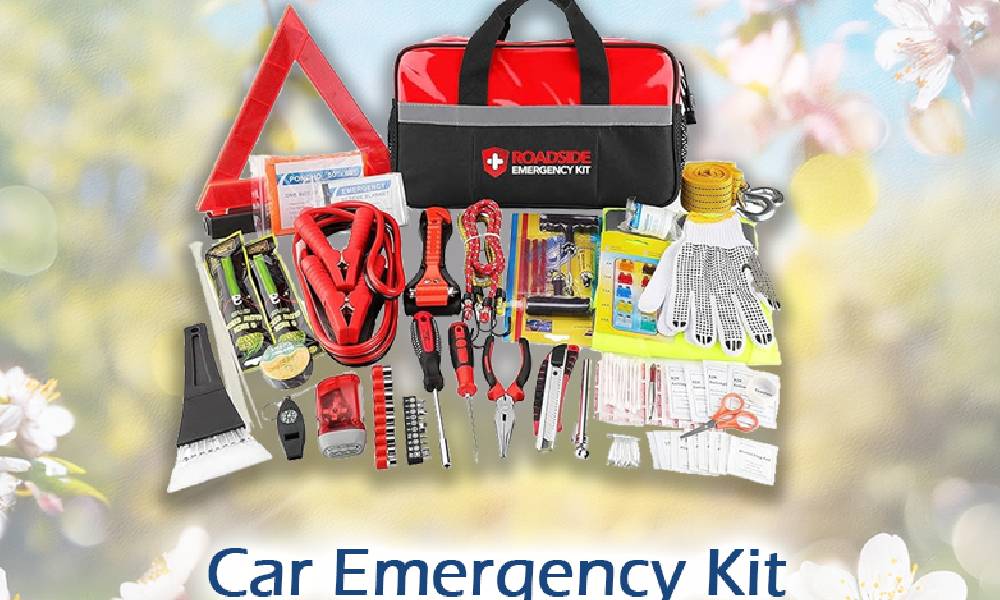
A ready-made roadside emergency kit covers many of these items in one bag. Add water, food, medications and documents to complete it.
When a storm is on the way
- Keep the tank at least half full from the moment a storm enters the forecast, and fill up early if one is approaching.
- Charge everything, including phones, power banks and your jump starter.
- Follow official instructions. Leave when local officials tell you to, and follow the posted evacuation routes rather than shortcuts.
- Park smart if you are staying put: choose higher ground, away from trees and power lines.
Never drive through flood water
The National Weather Service's advice is simple: turn around, don't drown. Just six inches of fast-moving water can knock an adult off their feet, about 12 inches of moving water can carry away most cars, and two feet can carry away SUVs and trucks. Water can also hide washed-out roads and downed power lines. If you see water over the road, find another way.
After the storm
Do not drive a car that has been in flood water before it has been checked by a mechanic, as water can damage the engine, electrics and brakes. Watch for debris, downed lines and traffic signals that are out, and treat any dark signal as a four-way stop.